If you’re “dead-bang” serious about real estate investing like I am — It’s time to “roll out” right now! There has never been a better time in 30 years or more to take full advantage of the current housing market. It’s a very simple proposition: if you own houses – and if you buy them right - your customers (tenants) will pay them off and you’ll end up a lot richer than you ever imagined!
Another thing that always seems to happen — A few years down the road, you’ll look back and see how smart you were! People are always telling me how lucky I am! Jay bought a bunch of houses when they were dirt-cheap! It was perfect timing, they say. I just grin a little! After many years investing, I’ve found that almost any time is the perfect time. The only thing lucky about my wealth today is that I jumped in headfirst and started!
With over 40 years of practice, I’ve perfected everything I do! I’ve become a very skilled investor. I pay the right price. I purchase only the kind of properties that will earn me money - and I buy them in locations where my tenants desire to live. Naturally, I must set the deals up to start with! I pay a small down payment and make the necessary improvements to add value. After that, my customers pay for everything else till I own the property free and clear! That’s fair, isn’t it? About all this lucky business they talk about — I’m totally convinced that good luck happens when you make the right decisions for yourself.
Speaking of decisions — If you’ve decided you need a little help or you’d like to improve your investment skills, take a quick peek at my latest book in major bookstores January 2009. The title, “INVESTING IN GOOD MINE HOUSES.” Chapter 1, THE MILLIONAIRES RECIPE, will show you how to change your luck forever – guaranteed.
The quickest road to success is to specialize- YES, become a specialist! Doctors, teachers and musicians all benefit from specializing in professions or activities that encompass a much larger field. Doctors may know a great deal about the human body generally, but an MD who specializes in bones will likely have greater knowledge in that area of practice - and so it is with fix-up investors in the real estate business.
Real estate investing covers bare land, construction and development and both residential and commercial activities. Restoration, remodeling and fix up can involve any improved real estate. Each has its own range of costs and measurements of value to determine the feasibility. Since costs and values can vary greatly by location, as well as the particular use, there’s no “one size fits all formula” that works for real estate investing generally! Selecting a specialty and learning it well is much faster than trying to learn everything about all the various ways to invest.
One can argue the pros and cons about which way is best, but for the majority of folks, residential real estate; like in houses and the homes we live in, is the easiest to understand, and in my opinion, the best place for beginning investors to get their feet wet. Naturally, where to start also involves the economics - as in how much money will it take to invest? Here again, everyday working folks find themselves extremely limited! As an example; when I started, $20,000 sounded like all the money in the world.
However, $20,000, $50,000 or even $100,000 won’t make much difference if you don’t know where to spend it. Money doesn’t guarantee safety and a larger amount will disappear just as quick when you don’t know what you’re doing. By specializing in one particular area, you stand a far greater chance of spending whatever amount you have, wisely!
FIXER PROPERTIES INVOLVE LESS COMPETITION
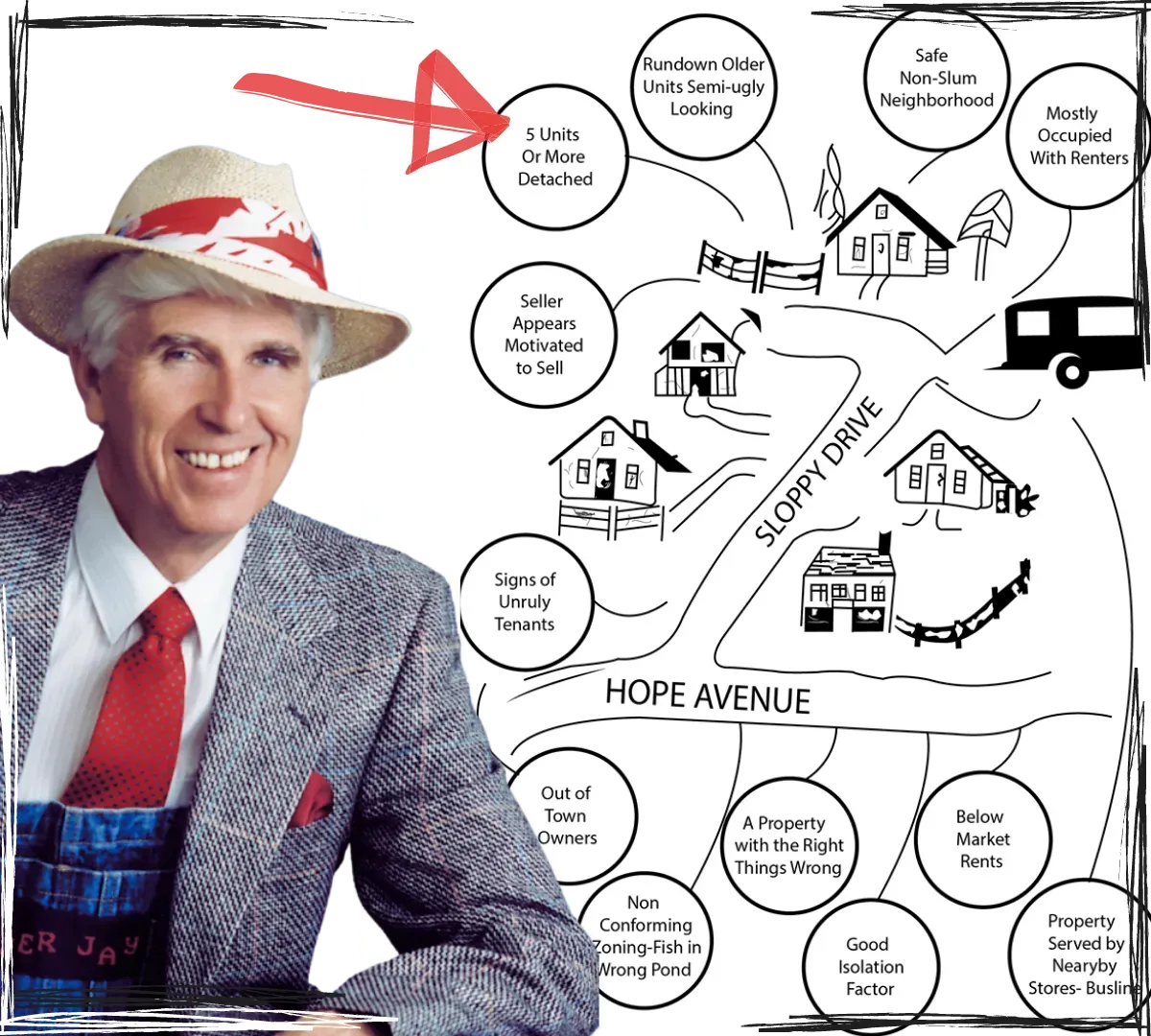
The less people who want what you’re after, the easier it will be to acquire what you want. Nothing secret about that, it’s one of the basic laws of nature! Competition drives up both cost - and desirability. Ugliness is my number one price reducer! Most people tend to back away from anything that’s ugly! Also, most people do not possess the vision, or have the training to spot value in the midst of pure ugliness. Learning to judge value where others can’t, can earn you a fortune in the house fix-Up business. Naturally, you must possess the skills to fix the problems once you find the right property.
Sellers who own ugly rundown properties (income units) often find very few buyers willing to make serious offers because most are looking for attractive, trouble-free properties! Even if they do make an offer - it’s generally a “low ball” offer, which often insults the seller. Insulted sellers don’t make counter offers, which of course, stops the deal cold. Naturally, rundown properties are worth less, but many times a workable purchase agreement can be reached by first determining what benefits the seller will accept. Here again, it’s the fix-up buyer’s skills, rather than the amount of money that makes the purchase successful.
In 1961 author and millionaire investor~ Robert W. Kent, wrote his best-sellerbook: “HOW TO GET RICH IN REAL ETATE” Published by Prentice Hall, Englewood,NJ. In the very first chapter Mr. Kent offers his opinion about the chances for an average ordinary working person to become the next real estate millionaire. On Page 2 Kent says: “It’s very feasible for any sincere man or woman who is steadfast in purpose and is free of the 3 cardinal faults; TIMIDY, NEGATlVENESS and LAZINESS. Self-doubt is the on1y thing that can stop you. You must learn to push doubt aside every time it rears its ugly head.”
Mr. Kent began his investment career while working in a 24 hour key shop in Brookline~ MA. Starting in 1931, he began acquiring older rundown flats and apartments as quickly as his limited funds would permit. The key he said; “Each property I purchase must provide me with MIF, money in the fist.” That simple strategy would make him a millionaire by the end of the ’40’s.
SO YEARS LATER - NO CHANGE
Today, more than half a century later~ Kent’s wisdom is still a recipe for making millionaires. Other than a few personal preferences, I can find nothing to improve on! Of course~ MIF is more often called cash flow~but the idea is to get it! What you call it don’t matter very much! In my opinion, cash flow investing is even more feasible today because there are more qualified teachers who offer excellent “hands-on” training.
DIFFERENCE BETWEEN SUCCESS & FAILURE VERY SMALL
After 45 years investing and 25 years of teaching others. I can honestly tell you - there’s not a great deal of difference between students who enjoy super success — And those who just flounder around year after year without much measurable progress. Even with all my years doin’ this stuff. I won’t pretend I’m smart enough to figure what causes one student to be successful and the next to fizzle out when the opportunity for both is equal! Allow me to share5 personal observations that perhaps might explain a few answers.
1. Many folks somehow imagine they are ready to compete and do business after a free seminar or reading a book. They are not being realistic with themselves.
2. Some people think there’s a magic formula to real estate investing, particularly with specialties like options. Note buying foreclosures. Probate sales and anything else that seems cleaner, easier and don’t sound like it requires too much time or effort! Friends - this is nothing more than a pipe dream that most often turns into a nightmare! You must understand real estate basics if you wish to be successful.
3. I cannot remember ever having a student “too dumb” to become a successful real estate investor. On the flip side, I’ve been around hundreds of folks “too smart” to make it! Somehow they seem to think that learning the basics and developing a sound strategy based on reality is simply a lesson designed for slow learners. These folks are most often doomed before they ever start!
4. The first rule of education — Thoroughly investigate the teacher and his credentials! If any instructor is telling you that real estate is “easy as pie” jump up immediately and run fast ’cause it just ain’t so! You should always check out the teacher behind the scenes. Make some telephone calls or better yet, write to newspapers who publish syndicated real estate columnists. Ask for their opinion about so and so.
5. While it’s true, you can learn real estate investing on your own, by yourself, without any help — It’s called the “cut ‘n try method”! And chances are, you can probably save a few hard-earned bucks on lessons. But the problem is, you can easily spend it all back - plus a whole lot more fixing up your mistakes. You can greatly hamper any success you might enjoy by having to continually repair early mistakes. I’m a past graduate of “cut ‘n try” and it kept me broke much longer than I deserved to be. There were not many classes or instructors teaching this stuff 45 years ago! Back then most TV’s were still black and white and the picture wouldn’t hold still. Believe me, learning the real estate investment business from someone who already knows how is far more profitable in the long run!
In 1970 my license was mailed to the broker at Forestland Realty, located in the small town of Jackson, in the heart of California’s gold country. It was my first job as a real estate salesman. By the year’s end I had earned $7200 in commissions! Not too bad for a start I figured, but still far short of my million dollar dreams
Mr. Roper, my real estate instructor, taught me enough to pass the examination on the very first go-around. At the time I remember thinking he was the smartest instructor in the world - but as things turned out, passing the real estate examination is not the reason I’m still thankful to Mr. Roper today. Instead, it was a casual remark he made to the, entire class of 76 students! Here’s what Mr. Roper said.
Commissions will not make any of you rich! Rich folks, he said, are the ones who get their names typed on deeds. They are the property owners. He then told us a simple formula for becoming wealthy! He said we should invest 10% of all our commissions in income properties. That way, he said, we’ll be earning money even as we sleep.
At the time I didn’t pay much attention to Mr. Roper’s advice! To me, it seemed like commissions would make me a whole lot richer than rents - and much quicker too! It took me several more years before I would finally test Mr. Roper’s advice. I purchased four FIXERUPPER HOUSES and began my journey living off the rents I collected.
Lots of water has passed under the bridge since I acquired those first four houses. Along the way I quickly discovered that fixed-up properties provided lots more cash flow. They also were 3 or 4 times more profitable! I also found out that you don’t need to be a Harvard graduate to make lots of money fixing ugly houses. Once you learn how to do it, you can keep repeating til you reach whatever income level you choose.
Before I sold a few houses several years’ back, my rents had soared to nearly $100,000 a month. Naturally I have expenses like everyone else - but I must tell you, I’m still a long ways ahead of any commissions I ever dreamed about earning.
One of the most frequent questions I’m asked at my seminars — Isn’t there a lot of work involved fixing up rundown houses” Of course there’s work, but when you’re done - the profits make it all worthwhile.
When you read my best-selling book, “INVESTING IN FIXER-UPPERS”, you’ll quickly discover why I’m the highest paid plumber in my town. Money makes plumbing seem much easier. The truth is, you don’t need to be a plumber, painter or electrician! About 90% of fix-up work is nothing more than hauling trash and cleaning. That’s why the ladies are often better than the guys. They understand the value of neatness and cleaning.
Folks often ask me — Is it hard to earn $100,000 every month from rents? When you first start out, it seems impossible, but as you begin to learn, it starts getting easier. First you’ll earn $1000 a month - and before too long you’ll reach $5000. The best part about investing the way I teach - you can quit after 10 houses or keep going til you own 200 like I did. It’s up to you! If you read my book, and you only acquire 3 or 4 solid income-producing properties, you’ll be lots better off than most of your friends.
Back in the mid 1990’s for almost 8 years in a row there was hardly a smidgen of appreciation in my hometown. Both housing prices and the cost to rent stayed about the same. Then suddenly, the wheels came off! Home prices doubled, rents shot up by 50% and vacancies dried up to almost none!
It don’t take a rocket scientist to figure out when you own a bunch of houses like I do - every morning it’s like gettin’ up to a brand new Christmas every day. Everything to do with real estate values had simply gone nuts! In most types of business, one might ask — What have you done differently? I almost feel guilty when I tell you the answer is nothing. I might look like a genius, but I’ve done absolutely nothing different for 35 years or so!
Back in October 1987, Fortune Magazine wrote an article (page 157), “REAL ESTATE HAS PRODUCED THE BIGGEST FORTUNES IN HISTORY.” The article revealed he names of the several super-rich guys with more zeros in their net worth than I can even count. As I read their stories, it occurred to me that although I’m not in their league financially, real estate investing has rewarded me with far more wealth than most other folks in my hometown.
ORDINARY INVESTORS CAR BUILD EXTRAORDINARY WEALTH
At my seminars I teach small-time, “Mom and Pop” investors how to become financially independent investing the same way I do! I show students how ordinary, everyday investors, both part-time and full-time, can build extraordinary wealth, one property at a time. Sophisticated investors like the kind in Fortune Magazine are by no means the only folks who can share in the American dream. Real estate wealth is wide open to everyone willing to roll up their sleeves, learn some new skills and jump right in the pie! That’s what I did and that’s what I can teach you!
Another thing I learned from reading Fortune Magazine was there are only two kinds of rich real estate investors! Those who start out like I did doing one small deal at a time - and those who inherit real estate wealth from others. If you don’t happen to be in the second group like most of us, then you’ll have to do it my way. The good news is - you can if you’ll give yourself permission to do it! I’m ready to teach you if you’re ready to learn. Do yourself a big favor Make up your mind right now to join me at my next seminar. You’ll be glad I helped you decide.
I don’t know about you folks but I’ve stayed mad at my obnoxious tenant for as long as 10 days in a row! I still remember not being able to get some emotional battles outta my head! It’s been quite a few years now - but I still remember how upset I used to get from arguing with a tenant. Naturally, my tenant didn’t occupy my thoughts every single minute of every single day, but it boils down to this — My tenant stole my valuable time! You simply cannot be a productive investor and get things accomplished when you are constantly upset with your tenants.
This is how my MEMOS got their start! I was extremely desperate to find a way to free my mind of tenant problems. We human types can only process one thought in our brain at one time. It’s nearly impossible to have constructive, moneymaking thoughts if you allow your tenants to constantly keep you upset! Believe me when I tell you, the time and money you can lose over emotional tenant confrontations staggers the imagination.
THE LANDLORD’S MIND - IT’S A TERRIBLE THING TO WASTE
Doing business with tenants is what us landlords do. Needless to say, it’s where our money comes from! However, nothin’ says we have to personally go see them for every little issue that pops up! For example; too many guests showing up at their duplex, cars parked on the lawn, habitual late rent payments. Most of these matters involving their tenancy can easily be handled much more efficiently and emotionless with short hand-written memos.
Managing Tenants By Mail
In order to say the right thing - it helps to pretend you are the tenant receiving the memo! How would this memo set with me, you should ask yourself! When I can say to myself, this is a reasonable request and it sounds quite fair, I feel I’m ready to send it to my tenant. I rarely need to waste any time thinking about what I want; I already know what I want! My challenge is to write a memo that my tenant will likely respond favorable to! You must always remember, threatening memos seldom change anything. Your goal is to present a written argument to your tenant making him understand that - he’s much better off to comply with your proposal than if he doesn’t. You must clearly spell out or paint a visual picture of what will likely happen if the tenant ignores your memo. Obviously, tenants are very sensitive to any words that sound like a rent increase might be in their future. We call this “The Hook”.
Allow me to share one of my favorite memos I use for my late paying tenants - I’m trying to convince them to pony up their late fees. This memo enjoys about an 85% success rate.
DEAR TERRY TARDY:
WE NEED YOU HELP! During the past six months or so, our records show your rents are coming in later and later! This month (Sept.), we didn’t receive your payment (check 9171) until the 13th. Apparently you forgot to add the late fee to your payment! As you know, we allow 5 extra days as a grace period after your official rent due date. Our rental contract shows your rent date is the 1st of each month, but it’s always mailed much later.
Starting immediately, please include the $40 late fee with your rent payment when it’s mailed after the 5th of the month. We use the postmark on the envelope to determine late rents. I hope this sounds fair to you! We’ve found that most of our tenants prefer paying a one time late fee rather than having their regular monthly rent increased! Thanks so much for your help
- Bob, Manager
In this memo, my hook is in the last sentence, which I’m sure you can pick out! Tenants can spot it in a split second - and I will tell you, this is an extremely effective memo for beefing up late fee collections. I might also point out - no tenant has ever called me with questions about this particular memo - it seems, they all understand it perfectly well!
Students who have learned to use my memos wouldn’t trade them for anything. Most claim, once they learn how to design - or create a convincing hook - they work like magic!
Real estate investors often complain that their wealth-building plans are seriously hampered because too few properties are available in the areas where they invest. You can’t buy real estate and build much wealth if nobody will sell you a property, right? Obviously, it takes both buyers and sellers to complete transactions! So, the big question is - -Where do you find real estate sellers when it seems like nothing is for sale? Cold calling is a technique where you contact property owners who own the kind of properties you’d like to acquire and try to persuade them to sell.
One of the first questions I’m always asked is — Why in the world would anyone consider selling their property to me merely because I contacted them and asked? There are more reasons than you might imagine, but first, let me confess to you — I did not invent cold calling. Real estate agents have been doing it for years and with enough success to keep doing it. The problem that many real estate agents have with cold calling is, it’s too much work! It’s much easier when sellers walk through their doors and hand them a listing. A big percentage of agents are willing to wait.
COLD CALLING IS A PROVEN TECHNIQUE
Naturally there’s a big difference between investors who operate properties for profits and: real estate’ agents who sell them for commissions. Cold calling can be different too! For example — Agents will sit at the telephone for hours calling long lists of owners. Obviously, that’s got to be very boring! The way Fred, my agent, and I do it is different To begin with, we write letters to property owners rather than make telephone calls! We also do some research before we (make any contact with property owners. This allows us to customize our (cold calls (letters) to fit the property and address any special circumstances pertaining to the owner.
Not every rental property” in my town is a candidate for my “cold call” letters. To start with, my specialty is the fixer real estate! I make money by acquiring properties I can “fix up”. My strategy is to quickly increase the value. Average looking properties without any visible signs of being rundown or neglect does not fit my profit plan, therefore, those properties are automatically eliminated from my cold calling list.
When I’m out driving around, I always keep an eye out for interesting properties I would like to own — Assuming I could buy them for a reasonable price and terms.
I keep a little notebook in my car to write down addresses, number of units and the condition. Also, I jot down my own estimate of their current value — And, the amount I would likely pay. You’ll find it very helpful if will draw a little sketch of the lot and get a measurement from the nearest street intersection (cross street) to the lot. A sketch will help you locate the property on the county assessor’s map when you visit the courthouse. Assessor maps don’t have street addresses, so the measurement will help you find the right location on a scaled map.
INFORMATION HUNTING IS VALUABLE AND FREE
All this information can be found at your local county courthouse or a title company if you happen to know someone who will help you. Assuming you don’t know who owns the ‘property, first take a look at the key location map. It will direct you to the proper assessor plat map where you’ll find the parcel you’re looking for. Once you locate the parcel number, you can then go to the name index and find out who the owner is! Both the courthouse and title company will assist you with this chore.
My research consists primarily of finding out who owns the property and where they live. It’s generally where the tax bills are mailed. I want to know how many mortgages or trust deeds are secured by the property and what their original amounts were. Also, the tax bill win show me the value for tax purposes. I like to know if my own estimate of value is somewhere in line with the county appraiser. I always try to estimate how much mortgage debt is still owed because I’m looking for properties with a lot of equity. You can’t negotiate a good discount if the owner has little equity to give. Also, I’m always looking for the opportunity to create a long-term seller carry back mortgage if I should purchase the property. Obviously, that sets the stage for buying back the mortgage at a nice discount sometime in the future.
FINDING PROFITABLE DEALS IS THE GOAL
The first thing to do is — Don’t panic! Good properties are always available, but it takes a little creative effort to dig ‘em out! Finding the right properties, meaning the kind that will produce monthly cash flow and long-term profits, is one of the most important skills you must develop to enjoy any success in this business. Remember, if this was too easy, everybody would be doing it and they’d all be rich! Finding properties that will earn reasonable profits is one of the biggest challenges for every investor regardless of how many might be for sale in his buying area. This technique can prove very profitable for agents and investors alike – ask Fred, he’ll tell you!
Many Subscribers are asking – How can we collect late rent fees? Here is the letter or memo I use – the only part that matters to most “late payers”” is paragraph 4, Late fee collection letters must have teeth to be effective.
SUBJECT: LATE RENT FEES
We need your help with timely rent payments! As you may know already, we are required by the owners to collect late fees for all rent payments received later than five (5) days past the rent due date. Rent due dates are shown on the rental contract you signed when you moved in.
In the case of HUD contracts, rents are normally due and payable on the first day of each month. The only way you can change or modify your HUD lease (voucher) is to contact your housing representative and request a modification. They will require some valid reason.
For those who mail rent payments, the postmark date shown on the envelope will be used to determine if rent was paid within the time limits. All rent payments received later than five (5) days past the rent due date must include a $35 late fee. Late fees are specified in your rental agreement with JMK Traders/One Stop Home Rental Company.
Most residents feel that a “one time” late fee is much more acceptable than a rent increase. Owners will often require us to increase rents when the late fees are not collected.
We appreciate anything you can do to help us with this problem, and obviously, you’ll be helping yourself at the same time.
Sincerely,
There are many good reasons why fixers are the perfect properties to begin a real estate investor career. However, leading the list is CASH FLOW. Fixer -houses by far offer the best opportunities for small-time investors, without much cash to spend, to acquire real estate with minimum down payments and still achieve cash flow quickly. No other real estate I know of will do that!
It is reasonable to expect - after paying an average of 10% down that one can create a positive cash flow property within a relatively short period of time after the purchase. Obviously, the time it takes will depend on many factors, such as how long does the fix-up take - how much market value is added to the property - and most certainly, the skills and aggressiveness of the fixer.
I have learned from experience - cash flow is much easier to achieve buying small multiple residential properties, such as 2 or 3 houses on a single lot, several duplexes with a house or two, or any combination of these cluster type properties. I own many properties from 5 to 8 living units each. They are excellent cash flow producers after a year or so. My goal for a complete turn-around is I8 to 21 months. We’ll discuss this part and the reasons why later.
LESS COMPETITION
Anytime there are fewer buyers who want something and you are shopping that particular market, your odds for success are greatly increased. Competition is what drives up prices. Conversely, the lack of it holds them down. It’s difficult to purchase prime real estate at a discount or get any kind of a break on the terms. The reason: Too many buyers are willing to pay the asking price. Why would a seller need to discount?
There are basically only 2 methods to buy real estate at bargain prices!
Method #1
Situations where you are the only potential buyer who knows about the deal (no competition) and, the seller is willing to accept your offer and terms without seeking outside bids (offers) from anyone else.
Method #2
Where the public knows about a property that’s available but cannot visualize its potential value - like after it’s all fixed up. They are therefore not buyers – only lookers.
Most students who seek my advice are not yet sophisticated enough to be in the information loop where they can benefit from Method #1. I’ll show you several ways I make Method #1 work for me later on! However, two of the most common ways Method #1 is used is by licensed real estate agents who buy their own listings and by friends of probate attorneys who get a secret telephone call when an asset (real estate) needs to be disposed of quickly. In both cases, the public never knows about the deal. Private deals avoid competition - therefore, they don’t get bid-up in price!
Method #2 is how most of my students will buy real estate. We shall focus in a market where properties are for sale. They are even advertised and certainly known to many potential buyers. However, 95% of all the potential buyers (the competition) see ugly rundown houses as pure junk and not even worth the asking price. Most will not make and offer and those who do will totally alienate sellers by insulting them with “low-ball” offers. With 95% of the competition gone, the playing field is definitely tilted in our direction.
Once you find an agent who seems like he or she talks your language! And of course, demonstrates some honest action like jumping right in and finding you a few properties that seem to fit your “looking for” instructions — You’ll be off to a running start.
One thing to remember here - Both you and your agent are new to each other! Don’t make the agent do all the work. You should help every way you can, especially in the “getting acquainted” mode. For example: If the agent is showing you properties in fair condition and you have told him you want junkers. Reiterate your instructions so you get what you want. By helping your agent who is trying to help you. — You’ll end up the big winner.
The benefits you’ll receive by taking the time to develop this relationship will be worth big bucks to you in the long term! Here are some of the most important ones.
1. Your agent has immediate “pipe-line” knowledge about when a bargain property is listed for sale - Either as a member of the multiple listing service or by networking through his associates and contacts. You’ll get the information quickly so you can write an offer fast if the property is what you’re looking for. Being first or near first is important!
2. A good agent will do “weeding-out” for you automatically once he or she becomes accustomed to what you really want. My agent, Fred, always brings me everything I need for making an educated evaluation on each deal. The information provided is normally a property profile, copies of existing promissory notes and either a filled out INCOME PROPERTY Analysis FORM (the kind in my fixer house book), at least the necessary data to fill one out. This is valuable “time saving” work for an investor - Yet it’s needed before any intelligent buying decision can be made. Obviously, it puts Fred closer to a commission if a purchase should result.
3. My agent provides a middleman “buffer” between the buyer and seller. This is a valuable service to me or any real estate investor who owns multiple properties already. “Mom and Pop” real estate owners (the kind I buy most properties from) often feel intimidated negotiating with me one-on-one. They seem to feel that because I own so many properties and am successful. They’ll automatically end of on the short end of the stick! It’s a perception that’s hard to eliminate regardless of whether it’s true or not. Fred can generally diffuse (this problem for me in his capacity as a neutral third party. Sellers often feel that a licensed person will be more sensitive to their needs, as opposed to direct, face-to-face negotiating with a “ring-savvy” buyer.
4. A good agent will never let the commission block a sale. The good ones are creative! Often they’ll take a fraction of what they have coming in order to close the sale. They’ll let you pay the balance later on, perhaps in monthly payments. My first agent, Merv, would allow me to pay him 50% of his commission at closing and for the balance he agreed to promissory notes, anywhere from $50 to $250 per month, depending on my projected cash flow. At one point I was paying monthly commissions of $1250 to Merv. In addition to helping me, Merv was very happy to have the steady monthly income, plus 08% interest.
5. A good agent can put you in contact with moneylenders, both private “hard money” guys and institutional lenders with programs that fit what you’re doing. Lenders shop real estate offices looking for qualified buyers among their clients. This is a valuable benefit to investors who are always in need of funds for upgrading and acquisitions. Naturally you and your project must qualify in order to take advantage here. Nonetheless, money is always the ammunition that keeps investors in the hunt.
As you might guess - The benefits must flow both ways between the agent and investor here’s what you shouldn’t do if you want to develop a profitable relationship!
A. Don’t chippy around! Use your agent for all your transactions unless you have special agreements or exceptions agreed upon. Loyalty will move mountains.
B. Don’t try to squeeze the commissions. If you are like me, that is, you negotiate commissions, do it before the agent goes to work! Not after the deal is written up and in escrow.
C. Don’t send agents on “wild goose” chases! The veterans will dump you if you try. But don’t even do it to the inexperienced dummies. Soon they’ll catch on and will have nothing more to do with you. I’ve heard “so-called” real estate lecturers tell novices to instruct their agents to draft up and present “low-ball” shotgun offers to purchase properties from the multiple listing book. Ask any respectable agent what he thinks of that advice! Take it from me; don’t waste your agent’s time with such nonsense.
D. Don’t make a ton of offers without ever closing anything. No agent can survive without “paydays” same as you. Take better aim so you’ll hit the target - Close the deals.
E. When other real estate agents call you direct - Always refer them to your agent. Also, some sellers will insist on dealing direct. They don’t want to involve an agent! That’s fine, but tell your own agent about the exception. Sometimes I pay Fred a small fee $500-1000 to help me do the legwork in the background. If you take good care of your agent, you will benefit the most in the long run, believe me!
This course will show you how to sell houses for top price in any real estate market regardless of what the economy is like.
Jay's lease option technique is different than most because it solves the two biggest problems facing every lease/option customer - namely, how to get the down payment together - and, qualifying for a new mortgage when it's time to purchase the property.