Entries Tagged as ''

How To Profit With Your Handyman Skills

Most folks who spend time shopping at the big home improvement stores are just like me! They’re continually searching for new ideas and projects they can do themselves to make improvements around the home. They’re ambitious people and many are quite skilled working with their hands! They love fiddling around the house fixing things and installing new gizmos. A good friend of mine is hopelessly hooked! He never seems to run out of new ideas. So far he’s added two new rooms and completely remodeled his bathroom since catching the bug!

What I’m trying to say - The guys and gals who show up bright and early weekend mornings with their shopping lists don’t consider building fences, remodeling bathrooms, pouring concrete and replacing floors - chores beyond their reach. If they botch-up the job, you never see them quit - they haul out the instructions and start over again until they get it right. The way I figure - these kind of people deserve to be MILLIONAIRES! Let me share a couple ideas that could easily make this happen.

That bug I mentioned - It’s called the HOME IMPROVEMENT BUG and it’s very contagious - and often comes with an overpowering addiction. Fortunately for those who catch it - it’s the very same bug that can make you a MILLIONAIRE.

I will tell you from my own experience - It’s fairly easy to convert your handyman skills and personal ambition into a MONEY MAKING OPPORTUNITY that could change your life forever. There’s hardly any difference between working at a hobby for no money - and becoming a house fixer investor that could make you the HIGHEST PAID HANDYPERSON in the neighborhood!

Share and Enjoy:
  • Digg
  • del.icio.us
  • Facebook
  • StumbleUpon
  • Google

Getting Started With Fixers

There are many good reasons why fixers are the perfect properties to begin a real estate investor career. However, leading the list is CASH FLOW. Fixer-houses by far offer the best opportunities for small-time investors, without much cash to spend, to acquire real estate with minimum down payments and still achieve cash flow quickly. No other real estate I know of will do that!

CASH FLOW QUICKLY

It is reasonable to expect - after paying an average of 10% down that one can create a positive cash flow property within a relatively short period of time after the purchase. Obviously, the time it takes will depend on many factors, such as how long does the fix-up take - how much market value is added to the property - and most certainly, the skills and aggressiveness of the fixer.

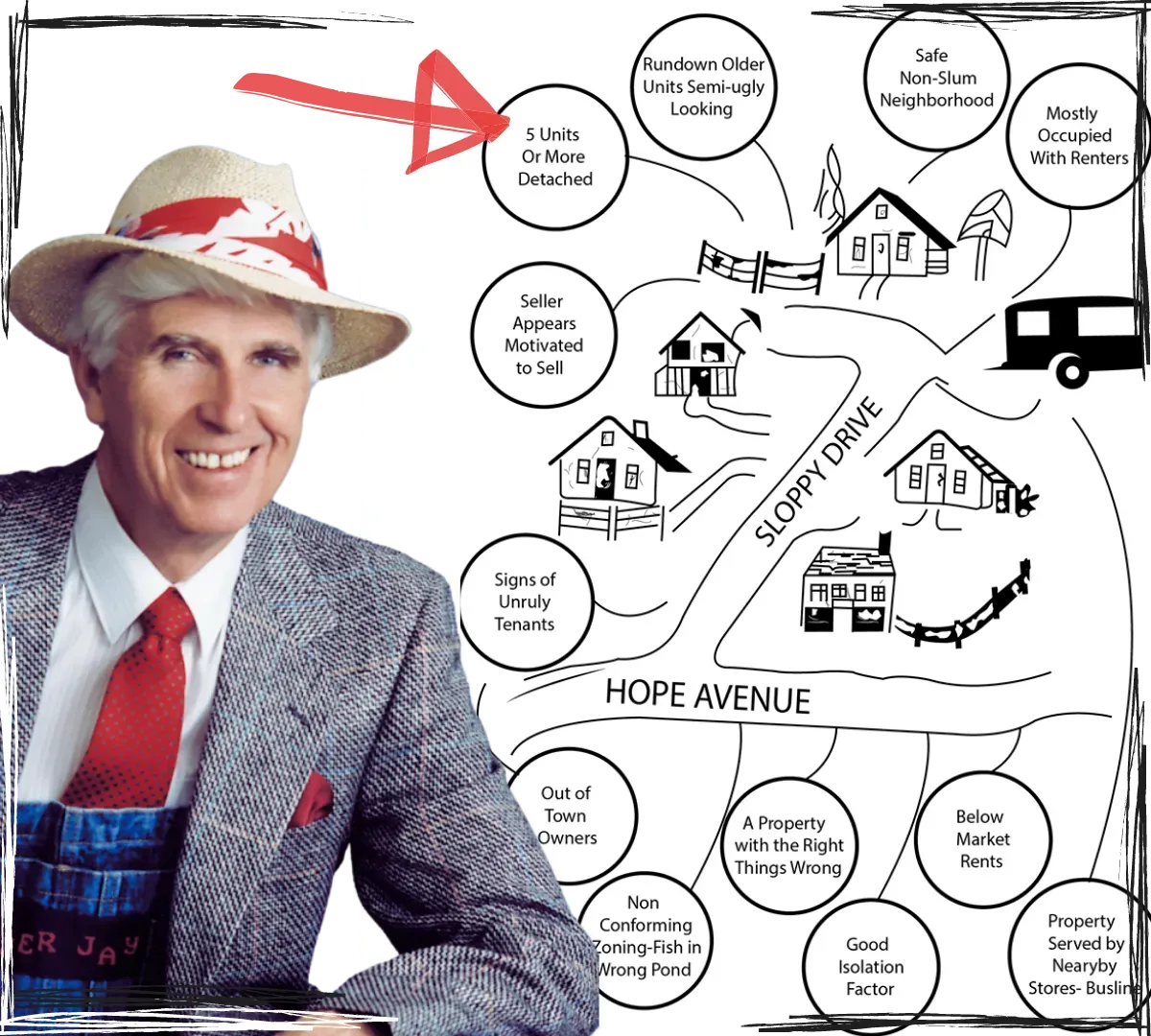
I have learned from experience - cash flow is much easier to achieve buying small multiple residential properties, such as 2 or 3 houses on a single lot, several duplexes with a house or two, or any combination of these cluster type properties. I own many properties from 5 to 8 living units each. They are excellent cash flow producers after a year or so my goal for a complete turn-around is 18 to 24 months. We’ll discuss this part and the reasons why later.

LESS COMPETITION

Anytime there are fewer buyers who want something and you are shopping that particular market, your odds for success are greatly increased. Competition is what drives up prices. Conversely, the lack of it holds them down. It’s difficult to purchase prime real estate at a discount or get any kind of a break on the terms. The reason: Too many buyers are willing to pay the asking price. Why would a seller need to discount?

There are basically only 2 methods to buy real estate at bargain prices!

Method #1

Situations where you are the only potential buyer who knows about the deal (no competition) and, the seller is willing to accept your offer and terms without seeking outside bids (offers) from anyone else.

Method #2

Where the public knows about a property that’s available but cannot visualize its potential value - like after it’s all fixed up. They are therefore not buyers - only lookers.

Most students who seek my advice are not yet sophisticated enough to be in the information loop where they can benefit from Method #1. I’ll show you several ways I make Method #1 work for me later on! However, two of the most common ways Method #1 is used is by licensed real estate agents who buy their own listings and by friends of probate attorneys who get a secret telephone call when an asset (real estate) needs to be disposed of quickly. In both cases, the public never knows about the deal. Private deals avoid competition - therefore, they don’t get bid-up in price!

Method #2 is how most of my students will buy real estate. We shall focus in a market where properties are for sale. They are even advertised and certainly known to many potential buyers. However, 95% of all the potential buyers (the competition) see ugly rundown houses as pure junk and not even worth the asking price. Most will not make and offer and those who do will totally alienate sellers by insulting them with “low-ball” offers. With 95% of the competition gone, the playing field is definitely tilted in our direction.

MOTIVATED SELLERS

Motivated sellers get that way for many reasons! Here’s a list of the most common - All except one, which we’ll tackle later:

A. Property owner loses his regular 8 to 5 job.

B. Family problems - mostly divorce or death.

C. Poor health - can’t work on property any longer.

D. Change of investment goals. Found better mousetrap.

E. Moving from area. Job transfers most common.
F. Retirement time - Ready to hang it up and go fishing.

When you read your local newspaper classifieds, as you should, you’ll see all of the various reasons listed above over and over again! OWNER MUST MOVE, POOR HEALTH FORCES SALE, GROUND FLOOR OPPORTUNITY, OWNER RETIRING, DIVORCE SPELLS - MY LOSS, BUT YOUR GAIN. These are typical classified wordings in the real estate “For Sale” sections of any sizable daily newspaper you care to look at. Obviously, the ads are written to persuade buyers how motivated the owners are to sell! Some ads are true - most are baloney. It’s impossible to tell about motivation from an ad. Still it’s a starting point.

You will need to make offers and have direct discussions with the seller before you can really determine a motivation level. One way to cut to the chase is to offer 50% of the asking price! If the seller doesn’t throw you out of the room - perhaps he’s really serious about selling.

Let’s tackle that one exception I mentioned above! Don’t look for this reason listed in classified advertising or any other sales pitch for that matter. You won’t find it! Fact is, the seller will do his darndest to hide this particular motivation! He is motivated because he is a failure. Chances are good he’s losing his shirt on the property if you can discover motivation of this kind, and if you have the ability to fix the problem, thereby relieving the seller of the mess he’s in, you’re in an excellent position to be richly compensated for your efforts.

I had exactly the same situation when I purchased Hillside Cottage. The sellers were going under water for the third time. I was the only lifeline available to them, and of course, in the end I richly rewarded for my problem-solving abilities.

Share and Enjoy:
  • Digg
  • del.icio.us
  • Facebook
  • StumbleUpon
  • Google

Sell For 10% Down With 100% Safety

Many investors like myself start out buying real estate to either keep for rental properties or to hold just long enough to re-sell at a reasonable profit! A large percentage of investors will find it necessary to carry back mortgages (promissory notes) for much of their equity in order to facilitate sales. Obviously, it’s much easier to sell properties when the seller offers good owner financing. It’s also easier to “jack up” the price when good terms and seller financing are offered!

As a result of these “carryback transactions” — Many small-time investors end up with “big time” note payments coming in after they sell all their properties. It’s kind of like a natural progression for investors — Transitioning from active daily management to a once-a-month trek to the mailbox!

HOW TO LIVE LIKE A KING ON A $1600 PENSION

A friend of mine, named -Sheldon, bought houses while he worked for IBM fixing computers! Sheldon recently sold his last two 4-unit buildings. He retired from IBM nearly two years ago. His retirement check from IBM is $1600 per month. His carryback notes from investing are $9,500. Sheldon will be the first to agree — Note payments coming in every month are very green indeed! Sheldon claims the note payments spend just as well as the IBM checks!

The bad news about selling all your properties with carryback financing is that you might not be in a position to pay all cash to buy a yacht, but the good news is –It won’t matter very much because they’ll sell it to you anyway. Exactly the same way you sold your houses!

ADDING EXTRA SAFETY TO SELLER CARRYBACK NOTES

It’s extremely important that you protect your backside when you sell properties and carry back the financing! This is very important because you don’t want to lose big bucks takings back (foreclosing) a property if the buyer can’t collect his rents and allows the houses to get trashed! This is the biggest concern for investors like myself who specialize in selling at tip-top prices with low (10%) down payments and easy-pay monthly terms. In order to protect myself, I use what I call my “2-FER” PROTECTION PLAN. The name comes from the 2 for the price of 1 sales used by major department stores to entice buyers! For example, stores will offer 2 pair of men’s jeans for the price of only 1 pair. The store jargon for this type of sale is a 2-fer sale.

Basically, what I need in exchange for selling properties with low cash down payment and EZ customized terms is more security! I want additional collateral, besides the property I’m selling. This can be easily accomplished if my buyer owns other real estate with equity and is willing to allow me to place a temporary mortgage on that property!

Most buyers, particularly “first timers”, are willing to accept this condition in exchange for the liberal purchase terms I offer! I have even recorded several additional collateral mortgages on the homes of my buyer’s parents! Obviously, it takes some convincing, but it generally always works. Here’s how a conversation might sound when I’m explaining the proposition to a buyer.

STICK TO THE FACTS AND SELL THE PLAN

Look Mr. Buyer, I’m more than happy to sell you my choice property (remember folks, I only sell fixed-up properties that look good), for very little money down! (Usually 10%) And, I’m also perfectly willing to give you good seller financing with payments you’ll be able to handle every month! I want you to be successful after you buy the property from me. The last thing I want is a messed-up property back! Now here’s my problem — 10% down is not really enough to protect me if things don’t work out for you! It could easily cost me 10% and more if I had to foreclose and fix-up the property again! What I need from you, Mr. Buyer, is a little more protection.

Let me suggest a plan that won’t cost you a dime! I will place a temporary mortgage on your residence (or other suitable property) for the amount of $50,000. There will be no payments and no interest charges on this mortgage! After you make 60 payments on my carryback note, I’ll instruct the title company to automatically remove the mortgage on your home! In other words, Mr. Buyer, you’ll be pledging an extra $ 50,000 worth of security to assure me that you will keep your promise to make the payments on my property — At least the first 60 months anyway!

BUYERS CAN BENEFIT BUT THE SELLER GETS PROTECTION

In case you’re wondering why would any buyer do this, the reason is quite simple. They will do it to get the low down payment deal with my EZ pay seller financing. After all, if my buyer does nothing more than what he promises to do anyway - the extra mortgage can do him no harm. If he doesn’t, however, I can foreclose on two mortgages instead of only one. Remember, the 2 pair of jeans for the price of one! Just substitute mortgages for jeans and you’ll fully understand how my 2-fer plan works to protect me.

I have no set rules about 60 months or $50,000 worth of additional collateral! You will need to evaluate your own level of risk. There are some situations where taking back a property would be beneficial to me - others not so. In almost all situations I would come out ahead if I were forced to foreclose on both mortgages. As a practical matter, if the buyer of your property turns out to be a flake, chances are you’d be paid the $50,000 added collateral amount and get your sale property back.

Share and Enjoy:
  • Digg
  • del.icio.us
  • Facebook
  • StumbleUpon
  • Google

Clearly Define Your Wealth Plan

[Read more →]

Share and Enjoy:
  • Digg
  • del.icio.us
  • Facebook
  • StumbleUpon
  • Google

Riding The Roller Coaster

Will Rogers once said: “The best test of any plan or idea is - Does it work?” I certainly agree with Mr. Rogers and I must say, his simple wisdom applies to real estate investors just about as much as anything else! Quite often plans or strategies will work for a short while - then they suddenly stop working! Buying and selling houses in a red-hot market is a good example. It works great until buyers stop buying - then it doesn’t! I can name at least 10 investor friends who’ve made a ton of money buying and selling houses — But then a down cycle takes it all back!

I have since concluded that Mr. Rogers’ statement can benefit real estate investors a little bit more by adding several extra words for us long-term, “womb to tomb” investors. Hence, the best test for any real estate investment plan or wealth-building strategy is –Does it work for all seasons during the long haul? Quite frankly, I don’t much care for the idea of implementing any investment strategy that could dump me on the poorhouse steps when I’m old and gray! For me, that’s right about now - wouldn’t you say?

No matter what the rest of our economy looks like - the sky is never falling for smart real estate investors who understand how to ride the “roller coaster”. Once you’ve been around the “investor’s block” a time or two, it will become clearly obvious that real estate investing is an up and down business. Not only is it up and down - it’s also a rapidly changing business.

Many who call themselves investors are really closer to speculators! Speculators have great difficulty surviving the roller coaster’s “down-hill” ride. The reason is simple! Most generally, in order for the speculation strategy to work, banks are needed to provide mortgage loans. Inflation must continually push up selling prices. For buy & sell investors (”flippers”), there must always be a pool of ready and willing buyers. The basic flaw with this strategy is that it don’t work very well in stormy weather or down cycles.

BORROWING MONEY

I have long ago quit counting the number of people who ask my advice about borrowing money from banks to finance real estate. I will tell you this however; it’s nearly always the first question on most investor minds when they call me asking for my assistance.

Let me share a couple thoughts I have about borrowing from conventional sources like banks and other commercial lenders. My first thought is, you must give away too much control. You’re also signing a note or mortgage that makes you personally liable for the debt, rather than just the property it! Should you ever experience foreclosure and your security, the property you’ve purchased doesn’t satisfy the amount of debt then your other assets, including your personal residence, can be sold to cover the bank’s full foreclosure costs.

It’s important to understand that bank loan officers are always happy to talk loans with qualified W-2 wage earners who are interested in buying a home-sweet-home to live in. It’s a bit different for self-employed entrepreneurs and landlords who buy rundown rental houses! That’s a totally different ballgame. A blind street artist with terminal palsy might qualify easier. Sole proprietors and self-employed folks are risky business to banks. They require several years’ worth of income tax returns (1040’s) showing a nice steady flow of income. Also, up-to-date profit & loss statements signed and audited by a certified public accountant. And that’s just for starters!

They’ll also likely need an appraisal, copies of all lease agreements, escrow papers showing the original purchase price and a host of other documents. Your credit cards can’t be overloaded with frivolous debts, like paintbrushes and toilet seats. Bankers will not tolerate late payments. Obviously, any blips in your credit is enough to have a loan officer throw-up on your application. Do-it-yourself investors should routinely consider alternative methods to finance their wealth-building plans — Otherwise growth can be seriously curtailed should ailing banks tighten their lending screws, as they often do.

INVESTORS WHO DEPEND ON A SINGLE PLAN SELDOM SURVIVE

Long-time TRADE SECRET subscribers already know that it’s my firm belief that do-it yourself investors should learn everything they can about many different ways to earn profits with real estate. I don’t believe you can reach your maximum potential as an investor until you learn to do many things well. These include buying single-family houses, foreclosure properties, rundown apartments, options, wrap installment selling, landlording and buying discount paper. In case I missed anything, just add it in with the rest because you need to learn it all! It may seem like a large task at first glance. However, everything I’ve mentioned is related. All the parts will tie together to make you a “total investor”. Refer to JAY’S MONEY TREE AND 13 PROFIT BULBS.

Before I forget to say this or mislead anyone — Let me say for the record, I also feel very strongly that investors should have a specialty. I define specialty as something you learn to do better than everyone else in your- particular area. Your “ace in the hole” investment strategy, you might call it. Something you can always count on to make you profits when everything else quits working. For example, I specialize in fixing rundown properties. It always works for me, even when other activities slow down. When you read about successful people, as I like to do, you’ll find that bad conditions or rough loan times at the bank have very little to do with their success. In fact, most don’t even mention economy or banks when they discuss what’s needed to be successful. Reading autobiographies of successful entrepreneurs will give you an inside look and some positive ideas about what it really takes to make it. I would strongly urge you to read success stories because they help you to mentally rise above the routine ups and downs of your everyday investment business.

Share and Enjoy:
  • Digg
  • del.icio.us
  • Facebook
  • StumbleUpon
  • Google
Click Here to Join Fixer Jay's Blog!